I’ve always thought weight loss gets framed in a strange way. Like it has to feel grim. Measured, strict, joyless. Eat this, don’t touch that, count every crumb like it owes you money. And yet, when you watch people who actually maintain a healthy weight over time, that’s not really how they live. Not most of them. They eat real food. They move their bodies in ways they enjoy. They pay attention, but not obsessively. There’s pleasure built into the process. Or there can be.
The body responds better when it feels safe and nourished, not punished. That part gets underestimated. Stress hormones matter. Enjoyment matters too. Even curiosity matters. When weight loss becomes something you’re participating in, not fighting against, the whole experience shifts. It stops feeling like a temporary project. It just starts to feel like life, with some side effects you notice later.
Eating in a way that feels generous, not restrictive
I’ve never been convinced by food rules that make meals feel smaller than they should be. The body doesn’t thrive on scarcity signals. It reacts to them. Sometimes quietly. Sometimes in ways you don’t connect back to food at all. Often by holding on tighter.
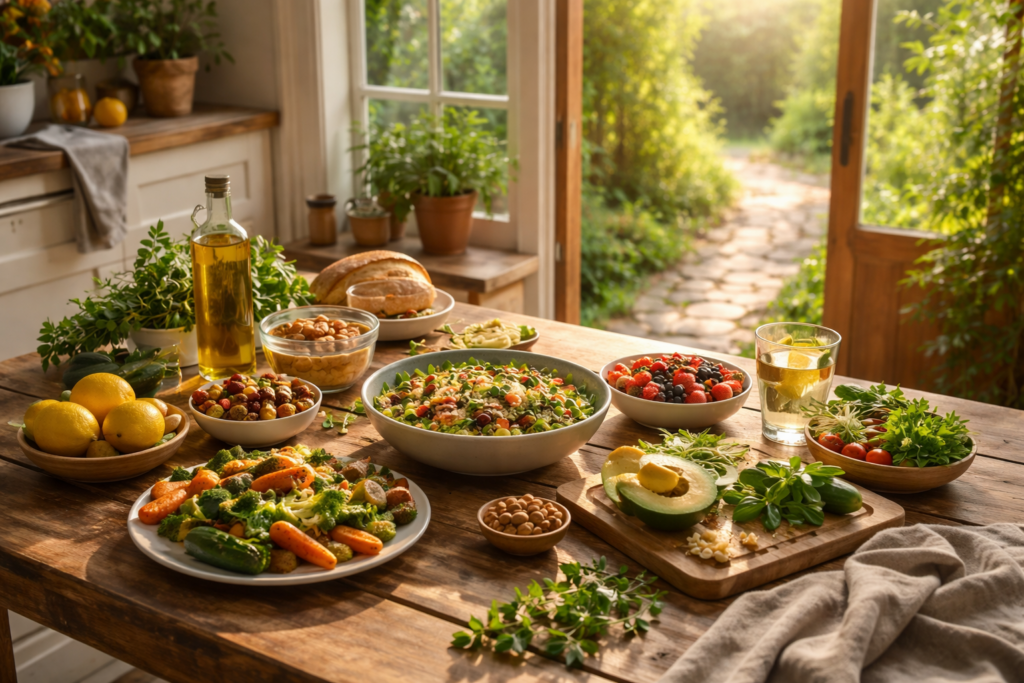
What works better is abundance, but not in a chaotic way. Whole foods tend to crowd out the ultra-processed stuff on their own. Not because you’re forcing it, but because a plate with roasted vegetables, olive oil, herbs, protein, and something crunchy actually satisfies. You finish eating and feel done. You’re not immediately scanning the kitchen again.
One shift that matters more than it sounds is starting meals with flavor in mind. Acidity, salt, fat, texture. A lemony dressing. Garlic sizzling in a pan. Fresh herbs chopped a little unevenly. When food tastes good, you slow down. You chew. You notice when you’ve had enough. That alone changes intake without really trying to manage it.
I’ve noticed people who enjoy cooking, even casually, tend to regulate their weight more easily. Not because they’re disciplined. Mostly because they’re involved. Dinner isn’t something that just shows up; it’s something they build, taste, adjust. That relationship matters. Maybe more than people like to admit.
Letting movement feel playful again
Exercise gets packaged as obligation. Burn calories. Hit targets. Track minutes. But most people didn’t fall in love with movement that way. As kids, movement was play. Running because it felt good. Climbing things. Dancing badly.
That instinct doesn’t disappear. It just gets buried under performance metrics. And expectations. And guilt, sometimes.
When movement feels fun, you do more of it without negotiating with yourself. A long walk with a podcast you actually like. Music on while cleaning the house a little harder than necessary. A swim. Stretching on the floor while watching something familiar. Nothing dramatic. For people who want ideas beyond the gym, the fitness section here has a lot of approachable movement options that fit into everyday life.
None of this looks impressive on a fitness app. But the body responds to frequency more than intensity. I’ve seen people lose weight simply by adding an hour of relaxed walking most days. No breathless suffering. Just consistency. Their joints feel better. Sleep improves. Appetite steadies. The body likes rhythm. It usually has.
Eating slower without making it weird
Mindful eating gets overcomplicated. You don’t need candles or silence or deep breathing between bites. You just need to stop rushing. Or maybe just catch yourself rushing and slow down a notch.
Most overeating happens when the brain doesn’t catch up in time. The stomach sends signals, but if you’re eating quickly, distracted, half-standing at the counter, it takes longer to register. By the time you feel full, you’re past it. You’ve already eaten through the signal.
A simple trick is to sit down, even for snacks. Put the food on a plate. That tiny pause changes things. So does chewing until the texture actually changes instead of swallowing halfway through. It sounds obvious. It still isn’t common. People know it. They don’t always do it.
When you slow down, food becomes more enjoyable. That’s the ironic part. You eat less, but it feels like more. Or at least enough. Which is the point.
Making “healthy” food feel indulgent
There’s no rule that healthy food has to feel virtuous. Some of the most satisfying meals are also the simplest. A baked potato with butter, salt, and herbs. Thick yogurt with berries and a little honey. Toast with olive oil and tomatoes. These aren’t punishment foods. They never really were.
Fat, in particular, has been misunderstood for a long time. Not all fats, obviously. But the ones that come with flavor and staying power. Olive oil, nuts, seeds, eggs, full-fat dairy if it agrees with you. They slow digestion. They keep blood sugar steadier. They make meals memorable. That matters more than it sounds.
When meals are satisfying, snacking becomes optional instead of compulsive. That’s a big deal. It changes the tone of the whole day. The whole rhythm.
Drinking for pleasure, not just discipline
Hydration advice often sounds like a chore. Chug water. Track ounces. But fluids can be enjoyable too. Herbal teas with real flavor. Sparkling water with citrus or a splash of juice. Iced green tea. Warm broths.
Sometimes thirst shows up as hunger. Not always. But often enough to matter. Having drinks you genuinely enjoy makes it easier to notice the difference. Or at least pause long enough to check.
Sweet drinks matter here. Liquid sugar doesn’t register the same way solid food does. It’s easy to overconsume without noticing. Some people experiment with traditional additions like apple cider vinegar for digestion or blood sugar balance, which is discussed more fully in this article. Replacing sugary drinks with something flavorful but lighter can quietly reduce calories without any sense of loss.
Letting routine do the heavy lifting
The body likes predictability. Regular meals. Consistent sleep. Gentle patterns. When routines stabilize, appetite signals tend to calm down. Things get quieter. Less reactive.
Sleep deserves more attention than it usually gets in weight conversations. Poor sleep shifts hunger hormones. You crave quick energy. You feel less satisfied. No amount of willpower fixes that. Protecting sleep is one of the most underrated tools there is. It’s not exciting, but it’s reliable. This idea shows up often across broader natural health discussions on the health news pages.
Even small rituals help. Breakfast that looks roughly the same most days. A walk after dinner. Stretching before bed. These aren’t dramatic changes. They’re just there. And over time, they add up.
Keeping food social and lighthearted
One thing that consistently shows up in healthy cultures is shared meals. Eating with other people. Talking. Laughing. Food as connection, not just fuel. It’s part of the broader philosophy you’ll see reflected across Natural Health Ltd’s approach to wellness.
When meals are social, people tend to eat more slowly. Portions regulate naturally. There’s a beginning, middle, and end to eating, instead of grazing until the food is gone. Or until you’re too full to care.
Even cooking with someone else shifts the energy. You taste as you go. You’re present. It’s harder to mindlessly overeat when you’re engaged. When you’re part of it. That alone changes things.
Using curiosity instead of control
I tend to prefer curiosity to discipline. What happens if you add more protein at breakfast? How does your body feel after a walk instead of scrolling? Which foods actually keep you full longer? You don’t need perfect answers. Just patterns.
This mindset removes some of the moral weight. There’s no “good” or “bad,” just information. The body gives feedback constantly. Learning to listen takes time. And patience. But it’s more sustainable than following rules you don’t really understand.
Weight loss that lasts usually looks a little boring from the outside. No extreme hacks. No dramatic restrictions. Just habits that feel livable. Enjoyable, even. Or at least not heavy.
When food tastes good, movement feels pleasant, and routines support you instead of exhausting you, weight tends to move in the right direction on its own. Not overnight. Not perfectly. But steadily enough to trust.
And that trust, once it’s there, makes things easier. Not effortless. Just easier.