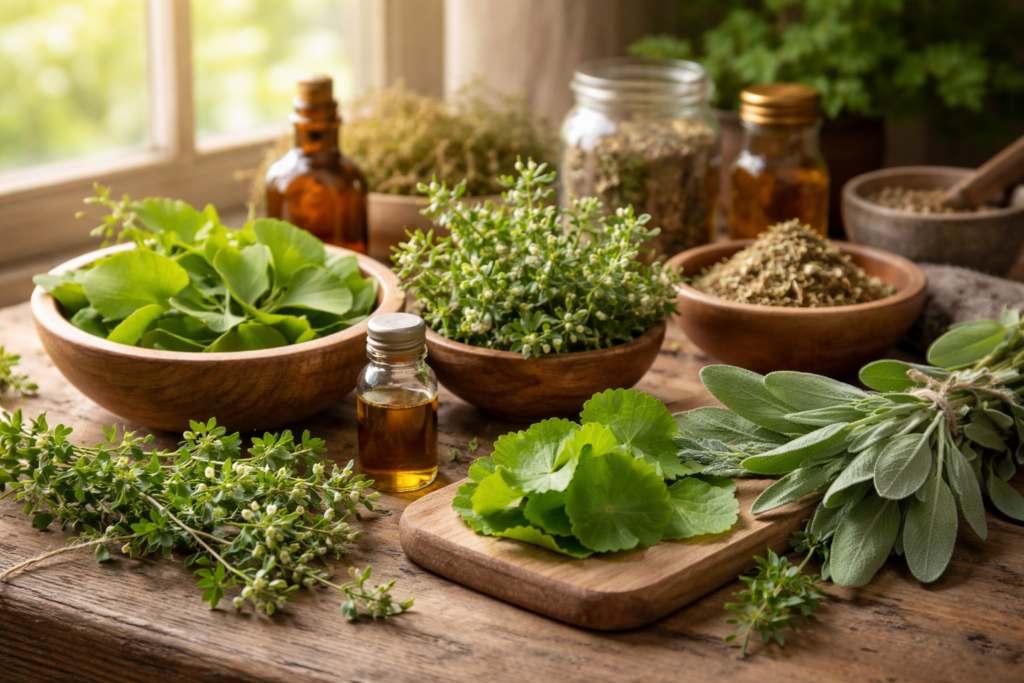
Herbs for Clarity and Focus
I’ve spent years paying close attention to how plants affect the mind, not in a dramatic or overstated way, but in the subtle, steady ways that matter when you need to think clearly, stay present, and do real work. Mental clarity isn’t about forcing focus or pushing through fog with caffeine. It’s about supporting the nervous system, circulation, and brain chemistry so your mind can do what it already knows how to do.
Clarity and focus are not traits you either have or don’t have. They’re states. And states respond to inputs. Sleep, hydration, blood sugar, stress, and yes, herbs, all shape how sharp or scattered you feel throughout the day.
Herbs don’t “hack” the brain. They nourish it, protect it, or gently stimulate it depending on their nature. That’s why the right herb at the right time matters more than taking everything at once. Many traditional systems and modern herbalists describe this same principle when discussing natural ways to support cognitive performance, as explored in this overview of herbs traditionally used for mental clarity and focus.
Understanding What Blocks Mental Clarity
Before I talk about specific herbs, it helps to understand why clarity fades in the first place. Most mental fog comes from one of four places: poor circulation to the brain, nervous system exhaustion, inflammation and oxidative stress, or unstable blood sugar.
When circulation is sluggish, the brain doesn’t receive oxygen and nutrients efficiently. When the nervous system is overstimulated or depleted, focus becomes brittle or scattered. Inflammation interferes with neurotransmitter signaling. Blood sugar swings pull attention down with them. The role inflammation plays in overall health, including cognitive function, is discussed often in herbal medicine, such as in traditional discussions around anti-inflammatory herbs like sage.
The herbs I rely on for clarity and focus work by addressing one or more of these underlying issues. That’s why they feel supportive instead of jarring.
Ginkgo Biloba for Circulation and Sharpness
Ginkgo biloba is one of the most studied herbs for cognitive function, and for good reason. Its primary action is improving circulation, especially to the brain. Better circulation means better oxygen delivery, which directly affects memory, alertness, and processing speed.
I often suggest ginkgo to people who describe their mind as “slow,” “foggy,” or “dim,” particularly if they notice cold hands or feet, which can hint at circulation issues. Ginkgo’s antioxidant compounds also protect neurons from oxidative stress, which accumulates over time. Ginkgo is frequently highlighted in broader alternative medicine resources that explore natural cognitive support, including those found in the Alternative Medicine section of Natural Health LTD.
A typical approach is a standardized extract taken in the morning, consistently, for several weeks. This isn’t a quick jolt. It’s a gradual sharpening that builds.
Rhodiola Rosea for Mental Endurance
Rhodiola is one of my favorite herbs for focus under pressure. It’s classified as an adaptogen, meaning it helps the body adapt to stress rather than overstimulating it.
When mental clarity collapses during long days or emotionally demanding work, stress hormones are usually involved. Rhodiola helps regulate cortisol, preserving mental stamina without the wired feeling stimulants can cause. Adaptogenic herbs are often discussed alongside natural energy support strategies, similar to those outlined in articles exploring natural remedies that boost energy and mental performance.
This herb is especially useful if focus fades as the day goes on or if stress makes your thinking feel frantic. Taken earlier in the day, rhodiola supports calm alertness, not nervous energy.
Bacopa Monnieri for Memory and Learning
Bacopa has a long history in Ayurvedic medicine as a brain tonic. It works slowly and deeply, supporting memory formation, learning capacity, and overall cognitive resilience.
I think of bacopa as a long-term investment in brain health. Its compounds support communication between neurons and reduce inflammation in brain tissue. Over time, this improves recall and mental clarity, especially during complex or detail-heavy tasks. Bacopa is frequently grouped with other traditional herbs discussed in resources like herbal guides focused on clarity and focus.
Bacopa is best taken consistently, often with food, as it can be grounding and slightly calming. That calming quality is part of what allows clearer thinking to emerge.
Lion’s Mane Mushroom for Nerve Support
While not technically an herb, lion’s mane deserves a place in this conversation. It supports nerve growth factor, which plays a role in maintaining and regenerating neurons.
I’ve seen lion’s mane help with mental clarity that feels blocked or dulled, particularly after periods of burnout. It doesn’t stimulate. It restores.
This mushroom is well suited for people who want clarity without feeling pushed. Taken daily, it supports a steady, grounded mental state.
Gotu Kola for Calm Focus
Gotu kola is often misunderstood. It doesn’t act like caffeine or typical stimulants. Instead, it improves circulation while calming the nervous system, which is a powerful combination for clear thinking.
This herb is helpful when focus is disrupted by anxiety, overthinking, or restlessness. It supports mental clarity by reducing background noise in the mind.
I often recommend gotu kola in tea or tincture form, especially during periods of heavy mental load or emotional strain.
How to Use Herbs for Real Results
More is not better when it comes to cognitive herbs. Clarity comes from precision, not excess.
I suggest choosing one primary herb based on what you’re experiencing most. Fog and slowness point toward ginkgo. Stress-related distraction suggests rhodiola. Memory challenges lean toward bacopa. Burnout responds well to lion’s mane. Anxiety-driven focus issues often improve with gotu kola.
Start low. Give the herb time. Pay attention to how your thinking feels across several days, not just one afternoon.
Supporting Herbs with Daily Habits
Herbs work best when the basics are in place. Hydration matters more than most people realize. Even mild dehydration reduces concentration.
Stable meals that include protein and healthy fats prevent the blood sugar crashes that sabotage focus. Gentle movement improves circulation to the brain. Short breaks reset attention more effectively than pushing through fatigue.
Herbs amplify these habits. They don’t replace them.
Safety and Considerations
Even gentle herbs deserve respect. Ginkgo can interact with blood-thinning medications. Rhodiola may feel too stimulating for some people if taken late in the day. Bacopa can be calming to the point of drowsiness at higher doses.
I always recommend checking interactions if you’re taking medications or managing a health condition. Thoughtful use leads to better outcomes.
Clarity Is a State You Can Support
Mental clarity doesn’t come from forcing productivity or chasing stimulation. It comes from supporting the systems that allow your brain to function smoothly and calmly.
Herbs offer a quiet kind of help. They don’t shout. They don’t rush. They restore balance so focus can return naturally.
I’ve seen how small, consistent changes reshape mental clarity over time. When the mind is supported, focus feels less like effort and more like alignment. And that’s where real clarity lives.